617-821-1757
Looking For FHA Loans?
Apply today for the mortgage
that’s right for you.
Unlock Low Rates with Ease
Discover how Geovanne Colon simplifies the mortgage qualification process for you.
Apply today for the mortgage
that’s right for you.
Unlock Low Rates with Ease
Discover how Geovanne Colon simplifies the mortgage qualification process for you.
Low Rate.
Zero Hassles.
Get a free quote
Low Rate.
Zero Hassles.
Get a free quote
Feel Overwhelmed by Mortgage Choices? I Understand.

Feeling Lost in a Sea of Mortgage Options? Finding the right mortgage can be a daunting task. With an overwhelming array of rates, terms, and lenders, it's easy to feel lost and uncertain. Are you worried about high interest rates, hidden fees, or choosing a mortgage that doesn't fit your long-term goals?

Welcome to Your Gateway to Home Ownership
Embark on a seamless journey towards your dream home with Geovanne Colon, your trusted ally in mortgage solutions. With years of expertise and a commitment to securing the lowest rates, my mission is to transform the complex landscape of home financing into a simplified, transparent path leading straight to the keys of your new home.
Why Choose Us?
Ready to Start?
Your perfect home won't wait forever, and neither should you. Begin your journey today with a loan officer that puts you first. By choosing us, you're not just getting a loan – you're gaining a lifelong partner in all your mortgage endeavors.
Start your no-obligation consultation now and join the myriad of satisfied homeowners who have unlocked the doors to their future with ease and confidence. Dive into our world of simplified lending, and let's turn your homeownership dreams into reality.
Welcome Home!
Loan Programs We Help With
Seamless Solutions, Limitless Possibilities
Residential Mortgage Programs
1. FHA Loans
Federal Housing Administration (FHA) Loans
• Suitable for first-time homebuyers
• Low down payment options (as low as 3.5%)
• Requires mortgage insurance
• Lenient credit scores accepted
• 203K Renovation Loans Available
2. Conventional Loans
Conventional Mortgage Loans
• Preferred by borrowers with stronger credit
• Down payments as low as 3%
• Available in fixed or adjustable rates
• No government insurance premiums
• HomeStyle Renovation Loan Available
3. USDA Loans
US Department of Agriculture (USDA) Loans
• Ideal for eligible rural and suburban homebuyers
• Zero down payment
• Low insurance costs
• Income and geographic restrictions apply
4. VA Loans
Veterans Affairs (VA) Mortgage Loans
• Exclusively for veterans, active-duty service members, and eligible spouses
• No down payment required
• No mortgage insurance needed
• Competitive interest rates
A. ITIN - No Social Security Loans
• For borrowers with an Individual Tax Identification Number
• Lacks Social Security number
B. 1099 Loans
• Designed for independent contractors or self-employed individuals
• Based on the 1099 tax form income
C. VOE Only
• Verification of employment as the primary source of income validation
D. Asset Depletion
• Utilizes borrower's liquid assets for qualification purposes
E. Bank Statement Loans
• Income based on bank statements, suitable for self-employed borrowers
F. DSCR - Investor No Income Verification
• For real estate investors, using property cash flow as a qualification metric
Non-Qualified Mortgage (Non-QM) Loans
Loan Programs We Help With
Seamless Solutions, Limitless Possibilities
Residential Mortgage Programs
1. FHA Loans
Federal Housing Administration (FHA) Loans
• Suitable for first-time homebuyers
• Low down payment options (as low as 3.5%)
• Requires mortgage insurance
• Lenient credit scores accepted
2. Conventional Loans
Conventional Mortgage Loans
• Preferred by borrowers with stronger credit
• Down payments as low as 3%
• Available in fixed or adjustable rates
• No government insurance premiums
3. USDA Loans
US Department of Agriculture (USDA) Loans
• Ideal for eligible rural and suburban homebuyers
• Zero down payment
• Low insurance costs
• Income and geographic restrictions apply
4. VA Loans
Veterans Affairs (VA) Loans
• Exclusively for veterans, active-duty service members, and eligible spouses
• No down payment required
• No mortgage insurance needed
• Competitive interest rates
Non-Qualified Mortgage (Non-QM) Loans
A. ITIN - No Social Security Loans
• For borrowers with an Individual Tax Identification Number
• Lacks Social Security number
B. 1099 Loans
• Designed for independent contractors or self-employed individuals
• Based on the 1099 tax form income
C. VOE Only
• Verification of employment as the primary source of income validation
D. Asset Depletion
• Utilizes borrower's liquid assets for qualification purposes
E. Bank Statement Loans
• Income based on bank statements, suitable for self-employed borrowers
F. DSCR - Investor No Income Verification
• For real estate investors, using property cash flow as a qualification metric
More Loan Programs
Foreign National Loans
• Tailored for non-U.S. citizens looking to buy investment or vacation properties in the U.S.
• May require larger down payments and proof of foreign income.
Jumbo Loans
• Exceed the loan limits set by the FHFA for conventional mortgages.
• Requires non-traditional underwriting to accommodate the larger loan amount.
Real Estate Investor Loans
• Customized loans for experienced real estate investors.
• Can include options for multiple properties under a single loan (blanket loans).
Non-Warrantable Condo Loans
• For condos that do not meet specific requirements by Fannie Mae or Freddie Mac.
• Necessary for financing condos in buildings with more owner-occupied spaces or litigation issues.
Credit Event Loans
• Available to borrowers with significant derogatory credit events, such as bankruptcy or foreclosure.
• Typically requires a higher down payment or additional reserves.
Hard Money/Private Lending
•For immediate or short-term financing needs
• Higher-cost, short-term loans
• Asset-based lending criteria
• Terms typically around 12 months
Fix and Flips
• Loans crafted for renovating and flipping properties
Commercial Loans
•Tailored for businesses to purchase or refinance commercial property
• Offering solutions for office buildings, retail spaces, and industrial properties
• Custom terms to align with business strategies
New Construction
• Financing for ground-up construction projects
Small Business Administration (SBA) Loans
• Federally backed to help start or grow a business
• Lower down payments
• Longer repayment terms
• Focused on small businesses
Bridge Loans
• Short-term loans to bridge the gap during transitional periods
Down Payment Assistance Programs
• Provides prospective homebuyers with loans or grants that they can use toward the down payment for a house.
• Most down payment assistance programs are designed for first-time homebuyers and offered by various institutions, such as government, non-profits, or lenders.
More Loan Programs
Foreign National Loans
• Tailored for non-U.S. citizens looking to buy investment or vacation properties in the U.S.
• May require larger down payments and proof of foreign income.
Jumbo Loans
• Exceed the loan limits set by the FHFA for conventional mortgages.
• Requires non-traditional underwriting to accommodate the larger loan amount.
Real Estate Investor Loans
• Customized loans for experienced real estate investors.
• Can include options for multiple properties under a single loan (blanket loans).
Non-Warrantable Condo Loans
• For condos that do not meet specific requirements by Fannie Mae or Freddie Mac.
• Necessary for financing condos in buildings with more owner-occupied spaces or litigation issues.
Credit Event Loans
• Available to borrowers with significant derogatory credit events, such as bankruptcy or foreclosure.
• Typically requires a higher down payment or additional reserves.
Hard Money/Private Lending
•For immediate or short-term financing needs
• Higher-cost, short-term loans
• Asset-based lending criteria
• Terms typically around 12 months
Fix and Flips
• Loans crafted for renovating and flipping properties
Commercial Loans
•Tailored for businesses to purchase or refinance commercial property
• Offering solutions for office buildings, retail spaces, and industrial properties
• Custom terms to align with business strategies
New Construction
• Financing for ground-up construction projects
Small Business Administration (SBA) Loans
• Federally backed to help start or grow a business
• Lower down payments
• Longer repayment terms
• Focused on small businesses
Bridge Loans
• Short-term loans to bridge the gap during transitional periods
Down Payment Assistance Programs
• Provides prospective homebuyers with loans or grants that they can use toward the down payment for a house.
• Most down payment assistance programs are designed for first-time homebuyers and offered by various institutions, such as government, non-profits, or lenders.
Who We Help?
Seamless Solutions, Limitless Possibilities
First Time Home Buyers
We know how overwhelming the process of buying a home is, especially if it is the first time that you're doing it. We will work closely with you to explain the process, to protect you from making mistakes that could cost you later, and to ensure that your mortgage gets approved and you get the home that you are so excited to be buying!
Move Up and Second Home Buyers
Buying a new home when you currently own one has it's own unique set of concerns. We can answer all of your questions about how to qualify and purchase a home when you already own one whether you're buying a new primary residence or a second vacation home.
Refinancing Home Owners
If you already own your home but you are looking to refinance to either save money with a lower interest rate or possibly take some cash out for any reason, we can help you with that. We also can show you how to make sure you are structuring your new financing to get the best deal possible.
Investment Buyers
If you're buying real estate for investment purposes, we can help you secure low rate financing to maximize your ROI.
Seniors Seeking Reverse Mortgages
If you are 62 years or older and are looking for options to stay in your home without a mortgage payment or to access your home's equity while still living there, I can answer your questions about reverse mortgages so you can decide if they are right for you.
What My Clients Say
Ready to Find Your Perfect Mortgage?
Are You A First Time Home Buyer?
Download Our Free Home Buyer's Guide
Other Resources You'll Find Helpful

Buyer's Guide for Real Estate Agent
(English)

Buyer's Guide for Real Estate Agent
(Spanish)

Seller's Guide for Real Estate Agent
(English)
Seller's Guide for Real Estate Agent
(Spanish)
Calculate Your Mortgage Payment
Our Blogs
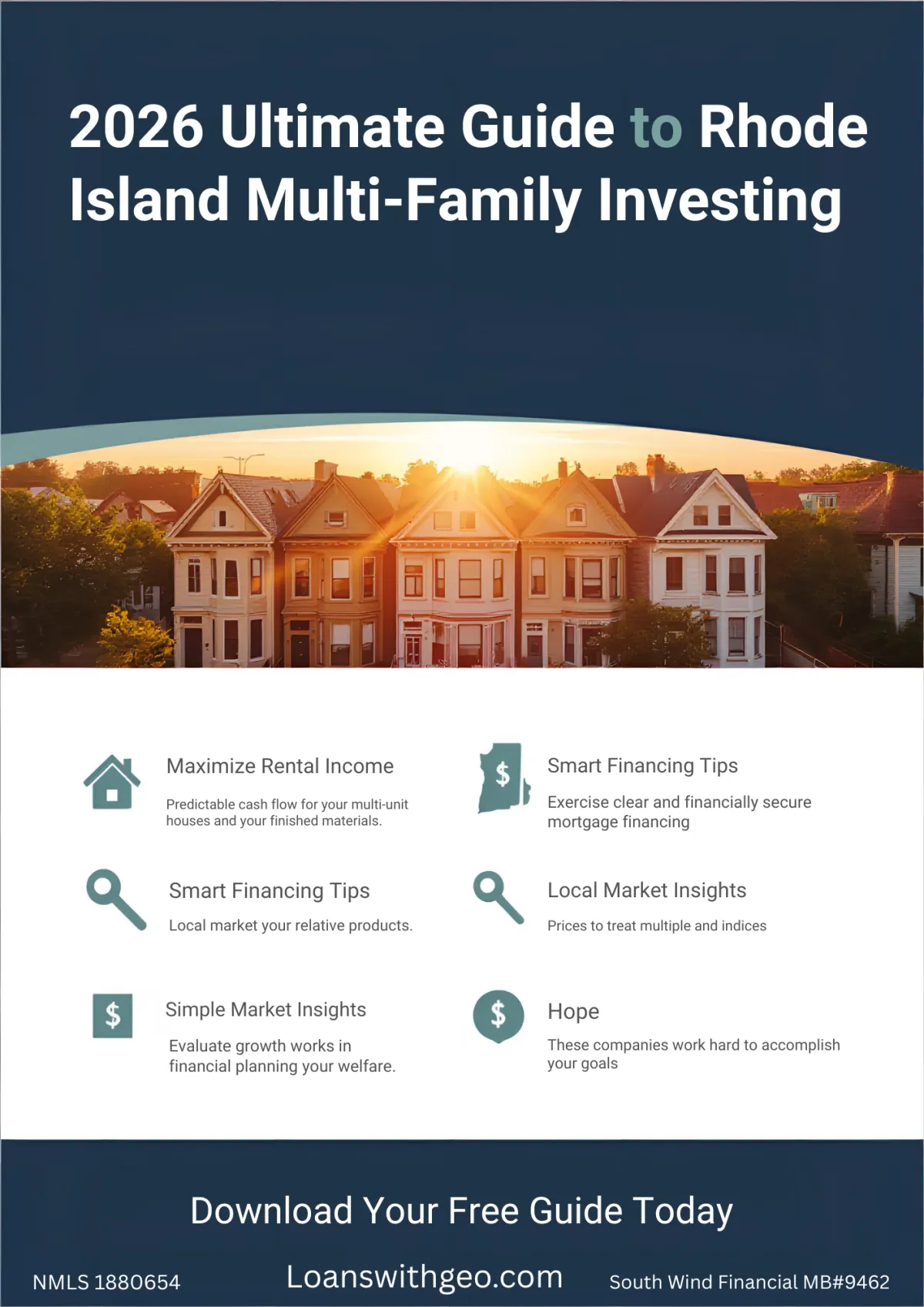
The 2026 Ultimate Guide to Rhode Island Multi-Family Investing: How to House Hack Your Way to Financial Freedom
The 2026 Ultimate Guide to Rhode Island Multi-Family Investing: How to House Hack Your Way to Financial Freedom
In 2026, the Rhode Island real estate market has reached a fascinating crossroads. While the median price of a single-family home in the Ocean State has climbed toward $525,700, savvy residents are looking past the "white picket fence" and toward the "three-decker."
Rhode Island is uniquely positioned as one of the best "House Hacking" markets in the country. With a dense stock of historic multi-family homes in cities like Providence, Pawtucket, and Woonsocket, and a rental market that remains one of the most competitive in New England, the math for owner-occupied investing has never been more compelling.
This guide is a comprehensive deep dive into how you can use 2026 loan products, state grants, and local market trends to buy a property that helps pay for itself.
Part 1: What Is House Hacking? (The 2026 Definition)
House hacking is the strategy of buying a 2-to-4 unit property, living in one unit as your primary residence, and renting out the remaining units to cover your housing expenses. In the high-cost environment of 2026, it is the single most effective way for Rhode Islanders to build wealth through real estate.
The Inventory Advantage
Unlike many Western states built on single-family tracts, Rhode Island’s urban landscape was designed for density. In the 02908 (Providence) and 02860 (Pawtucket) zip codes, multi-family properties are often the dominant housing type.
Availability
You aren't hunting for a needle in a haystack; you’re choosing from a robust inventory of 2-to-4 unit buildings.
Historical Resilience
These properties have held their value because they are income-producing assets. Even when the single-family market fluctuates, the demand for rental housing remains constant.
The Rental Demand Surge
As of March 2026, the average rent for a three-bedroom apartment in Providence has reached approximately $3,750. For a house hacker, this means the "tenant-paid" portion of your mortgage is at an all-time high, often allowing owners to live with significantly reduced net housing costs.
Part 2: 2026 Financing Mastery – FHA vs. Conventional
Choosing the right loan is the difference between a deal that "works" and one that sits on the market. In 2026, we have seen significant updates to loan limits.
The FHA Low Down Payment Option
The FHA loan remains a favorite for house hackers due to its low entry cost and flexible credit requirements.
2026 FHA Loan Limits (Providence-Warwick MSA)
Duplex (2 Units): $1,008,450
Triplex (3 Units): $1,219,000
Fourplex (4 Units): $1,514,950
The Advantage
You can enter the market with a 3.5% down payment.
The Qualification Boost
Lenders can often use 75% of the projected rental income from the units you aren't living in to help you qualify for a higher loan amount.
The 5% Conventional Multi-Family Move
In a massive win for 2026 buyers, Fannie Mae and Freddie Mac now allow 5% down payments on 2–4 unit homes for owner-occupants.
Why It’s a Game Changer
There is no "self-sufficiency test" required (a common hurdle for FHA 3–4 unit properties). If you want a 4-unit in a neighborhood where rents are slightly lower, Conventional is often the preferred path.
PMI Advantage
Private Mortgage Insurance (PMI) on a Conventional loan can be cancelled once you reach 20% equity, whereas FHA mortgage insurance typically remains for the life of the loan.
Part 3: Rhode Island Multi-Family Hotspots (2026 Market Data)
To find the best value, you have to know the numbers. Here are the median sales prices and insights for the top house-hacking hubs as of early 2026.
CityMedian Home Sale Price (2026)Market InsightProvidence$580,000Prices up 16.2% YoY; high demand near hospitals and universities.Warwick$480,000Significant 20.1% price jump; popular for commuters.Pawtucket$425,000Up 6.3%; massive growth near the new transit center.Cranston$450,000Steady 6.1% growth; great for stable, long-term rentals.Woonsocket$405,000The most accessible entry point in the state for first-time investors.
The "Pawtucket Transit" Strategy
Pawtucket is currently the highest-rated market for house hackers. The Pawtucket-Central Falls Transit Center has turned the city into a viable bedroom community for Boston. Commuters are willing to pay a premium for a 45-minute ride to South Station, allowing you to charge "Boston-lite" rents while paying "Pawtucket-level" mortgage prices.
Part 4: The 2026 Lead Mitigation & Legal Landscape
You cannot talk about RI rentals without talking about Lead. Rhode Island is a "Lead-Safe" state, and the laws have tightened significantly.
The Certificate of Lead Conformance (CLC)
If you rent out a unit in a building built before 1978, you must have a CLC.
The Requirement
A licensed lead inspector must perform a dust-wipe test. The CLC must be renewed every two years.
The Risk
Under 2026 mandates, if you don't have a CLC, a tenant can legally petition the court to withhold rent into an escrow account until the property is compliant.
The Solution
Use an FHA 203k Renovation Loan. This allows you to borrow the money for lead abatement—like new windows, siding, or door frames—and wrap those costs into your mortgage.
Part 5: The 2026 "Taylor Swift Tax"
Investors should be aware of the Non-Owner Occupied Property Tax Act (effective July 1, 2026).
The Rule
Properties valued at $1M or more that are not owner-occupied face a new statewide tax ($2.50 per $500 of value over $1M).
The House Hacker Loophole
Because you live in one of the units, your property is classified as Owner-Occupied, exempting you from this surcharge even if your multi-family is worth $1.2M. This gives local owner-occupants a massive competitive advantage over out-of-state investors.
Part 6: ADUs—The "New" Frontier of Rhode Island Wealth
The biggest "cool factor" for Rhode Island in 2026 is the sweeping change to Accessory Dwelling Unit (ADU) laws. This effectively opens up house hacking to single-family homeowners.
What Is an ADU?
Often called "Granny Flats" or "In-Law Suites," these are secondary units on a single-family lot. In 2026, Rhode Island law now allows ADUs by right on any lot of at least 20,000 square feet for residential use, or where the ADU is within the existing footprint of the home.
Why This Is a House Hacking Game Changer
You no longer need to buy a traditional multi-family to house hack. You can buy a single-family home and build a detached "Tiny Home" or convert a garage into a rental unit.
Size Limits
Rhode Island allows a 1-bedroom ADU of at least 900 square feet or a 2-bedroom ADU of at least 1,200 square feet (or 60% of the primary dwelling's area, whichever is less).
Financing the Build
As your loan officer, I can help you use a Home Equity Line of Credit (HELOC) or a Construction-to-Permanent loan to fund the build.
Part 7: Step-by-Step House Hacking Execution
If you want to close on a multi-family in the next 6 months, follow this 2026 roadmap:
Get "Verified" Pre-Approved
In a market with limited supply, a standard pre-approval isn't enough. You need a lender who has already verified your taxes and income through an underwriter.
The "Lead-Safe" Walkthrough
When touring properties, look for peeling paint on windows. A "Lead-Hazard" property is actually a great negotiation point to use a renovation loan.
The "Third Unit" Potential
With the new ADU laws, look for properties with oversized lots or large detached garages. What is a "2-family" today could become a "3-unit" asset tomorrow with a simple conversion.
Stop Paying Your Landlord's Mortgage
The biggest mistake RI buyers made in 2025 was waiting for a market crash that never came. In 2026, the strategy is clear: Buy the asset now, and manage the financing later.
By leveraging low down payment FHA or Conventional programs and stacking them with the latest state grants, you are building equity with someone else's money.
Whether you’re looking in the urban core of Providence or the value pockets of Woonsocket, the house-hacking path is the fastest way to wealth in Rhode Island.
Ready to Run the Numbers?
As a mortgage professional with deep roots in the Rhode Island market, I specialize in the complex math of owner-occupied investing and ADU financing. Contact Geovanne Colon, NMLS: 1880655 AT [email protected] or 617-821-1757 for your next loan.
Disclaimer: All loan programs are subject to credit and property approval. Terms and conditions apply. Contact a licensed mortgage professional for a personalized consultation.

The 2026 Ultimate Guide to Rhode Island Multi-Family Investing: How to House Hack Your Way to Financial Freedom
The 2026 Ultimate Guide to Rhode Island Multi-Family Investing: How to House Hack Your Way to Financial Freedom
In 2026, the Rhode Island real estate market has reached a fascinating crossroads. While the median price of a single-family home in the Ocean State has climbed toward $525,700, savvy residents are looking past the "white picket fence" and toward the "three-decker."
Rhode Island is uniquely positioned as one of the best "House Hacking" markets in the country. With a dense stock of historic multi-family homes in cities like Providence, Pawtucket, and Woonsocket, and a rental market that remains one of the most competitive in New England, the math for owner-occupied investing has never been more compelling.
This guide is a comprehensive deep dive into how you can use 2026 loan products, state grants, and local market trends to buy a property that helps pay for itself.
Part 1: What Is House Hacking? (The 2026 Definition)
House hacking is the strategy of buying a 2-to-4 unit property, living in one unit as your primary residence, and renting out the remaining units to cover your housing expenses. In the high-cost environment of 2026, it is the single most effective way for Rhode Islanders to build wealth through real estate.
The Inventory Advantage
Unlike many Western states built on single-family tracts, Rhode Island’s urban landscape was designed for density. In the 02908 (Providence) and 02860 (Pawtucket) zip codes, multi-family properties are often the dominant housing type.
Availability
You aren't hunting for a needle in a haystack; you’re choosing from a robust inventory of 2-to-4 unit buildings.
Historical Resilience
These properties have held their value because they are income-producing assets. Even when the single-family market fluctuates, the demand for rental housing remains constant.
The Rental Demand Surge
As of March 2026, the average rent for a three-bedroom apartment in Providence has reached approximately $3,750. For a house hacker, this means the "tenant-paid" portion of your mortgage is at an all-time high, often allowing owners to live with significantly reduced net housing costs.
Part 2: 2026 Financing Mastery – FHA vs. Conventional
Choosing the right loan is the difference between a deal that "works" and one that sits on the market. In 2026, we have seen significant updates to loan limits.
The FHA Low Down Payment Option
The FHA loan remains a favorite for house hackers due to its low entry cost and flexible credit requirements.
2026 FHA Loan Limits (Providence-Warwick MSA)
Duplex (2 Units): $1,008,450
Triplex (3 Units): $1,219,000
Fourplex (4 Units): $1,514,950
The Advantage
You can enter the market with a 3.5% down payment.
The Qualification Boost
Lenders can often use 75% of the projected rental income from the units you aren't living in to help you qualify for a higher loan amount.
The 5% Conventional Multi-Family Move
In a massive win for 2026 buyers, Fannie Mae and Freddie Mac now allow 5% down payments on 2–4 unit homes for owner-occupants.
Why It’s a Game Changer
There is no "self-sufficiency test" required (a common hurdle for FHA 3–4 unit properties). If you want a 4-unit in a neighborhood where rents are slightly lower, Conventional is often the preferred path.
PMI Advantage
Private Mortgage Insurance (PMI) on a Conventional loan can be cancelled once you reach 20% equity, whereas FHA mortgage insurance typically remains for the life of the loan.
Part 3: Rhode Island Multi-Family Hotspots (2026 Market Data)
To find the best value, you have to know the numbers. Here are the median sales prices and insights for the top house-hacking hubs as of early 2026.
CityMedian Home Sale Price (2026)Market InsightProvidence$580,000Prices up 16.2% YoY; high demand near hospitals and universities.Warwick$480,000Significant 20.1% price jump; popular for commuters.Pawtucket$425,000Up 6.3%; massive growth near the new transit center.Cranston$450,000Steady 6.1% growth; great for stable, long-term rentals.Woonsocket$405,000The most accessible entry point in the state for first-time investors.
The "Pawtucket Transit" Strategy
Pawtucket is currently the highest-rated market for house hackers. The Pawtucket-Central Falls Transit Center has turned the city into a viable bedroom community for Boston. Commuters are willing to pay a premium for a 45-minute ride to South Station, allowing you to charge "Boston-lite" rents while paying "Pawtucket-level" mortgage prices.
Part 4: The 2026 Lead Mitigation & Legal Landscape
You cannot talk about RI rentals without talking about Lead. Rhode Island is a "Lead-Safe" state, and the laws have tightened significantly.
The Certificate of Lead Conformance (CLC)
If you rent out a unit in a building built before 1978, you must have a CLC.
The Requirement
A licensed lead inspector must perform a dust-wipe test. The CLC must be renewed every two years.
The Risk
Under 2026 mandates, if you don't have a CLC, a tenant can legally petition the court to withhold rent into an escrow account until the property is compliant.
The Solution
Use an FHA 203k Renovation Loan. This allows you to borrow the money for lead abatement—like new windows, siding, or door frames—and wrap those costs into your mortgage.
Part 5: The 2026 "Taylor Swift Tax"
Investors should be aware of the Non-Owner Occupied Property Tax Act (effective July 1, 2026).
The Rule
Properties valued at $1M or more that are not owner-occupied face a new statewide tax ($2.50 per $500 of value over $1M).
The House Hacker Loophole
Because you live in one of the units, your property is classified as Owner-Occupied, exempting you from this surcharge even if your multi-family is worth $1.2M. This gives local owner-occupants a massive competitive advantage over out-of-state investors.
Part 6: ADUs—The "New" Frontier of Rhode Island Wealth
The biggest "cool factor" for Rhode Island in 2026 is the sweeping change to Accessory Dwelling Unit (ADU) laws. This effectively opens up house hacking to single-family homeowners.
What Is an ADU?
Often called "Granny Flats" or "In-Law Suites," these are secondary units on a single-family lot. In 2026, Rhode Island law now allows ADUs by right on any lot of at least 20,000 square feet for residential use, or where the ADU is within the existing footprint of the home.
Why This Is a House Hacking Game Changer
You no longer need to buy a traditional multi-family to house hack. You can buy a single-family home and build a detached "Tiny Home" or convert a garage into a rental unit.
Size Limits
Rhode Island allows a 1-bedroom ADU of at least 900 square feet or a 2-bedroom ADU of at least 1,200 square feet (or 60% of the primary dwelling's area, whichever is less).
Financing the Build
As your loan officer, I can help you use a Home Equity Line of Credit (HELOC) or a Construction-to-Permanent loan to fund the build.
Part 7: Step-by-Step House Hacking Execution
If you want to close on a multi-family in the next 6 months, follow this 2026 roadmap:
Get "Verified" Pre-Approved
In a market with limited supply, a standard pre-approval isn't enough. You need a lender who has already verified your taxes and income through an underwriter.
The "Lead-Safe" Walkthrough
When touring properties, look for peeling paint on windows. A "Lead-Hazard" property is actually a great negotiation point to use a renovation loan.
The "Third Unit" Potential
With the new ADU laws, look for properties with oversized lots or large detached garages. What is a "2-family" today could become a "3-unit" asset tomorrow with a simple conversion.
Stop Paying Your Landlord's Mortgage
The biggest mistake RI buyers made in 2025 was waiting for a market crash that never came. In 2026, the strategy is clear: Buy the asset now, and manage the financing later.
By leveraging low down payment FHA or Conventional programs and stacking them with the latest state grants, you are building equity with someone else's money.
Whether you’re looking in the urban core of Providence or the value pockets of Woonsocket, the house-hacking path is the fastest way to wealth in Rhode Island.
Ready to Run the Numbers?
As a mortgage professional with deep roots in the Rhode Island market, I specialize in the complex math of owner-occupied investing and ADU financing. Contact Geovanne Colon, NMLS: 1880655 AT [email protected] or 617-821-1757 for your next loan.
Disclaimer: All loan programs are subject to credit and property approval. Terms and conditions apply. Contact a licensed mortgage professional for a personalized consultation.
Subscribe to my newsletter
South Wind Financial, Inc.
Mortgage Broker Lic #MB9462
Branch NMLS #86116
1356 Atwood Ave. Johnston, RI 02919

Stay Connected:


Privacy Policy | Terms of Services
© Copyright All Rights Reserved