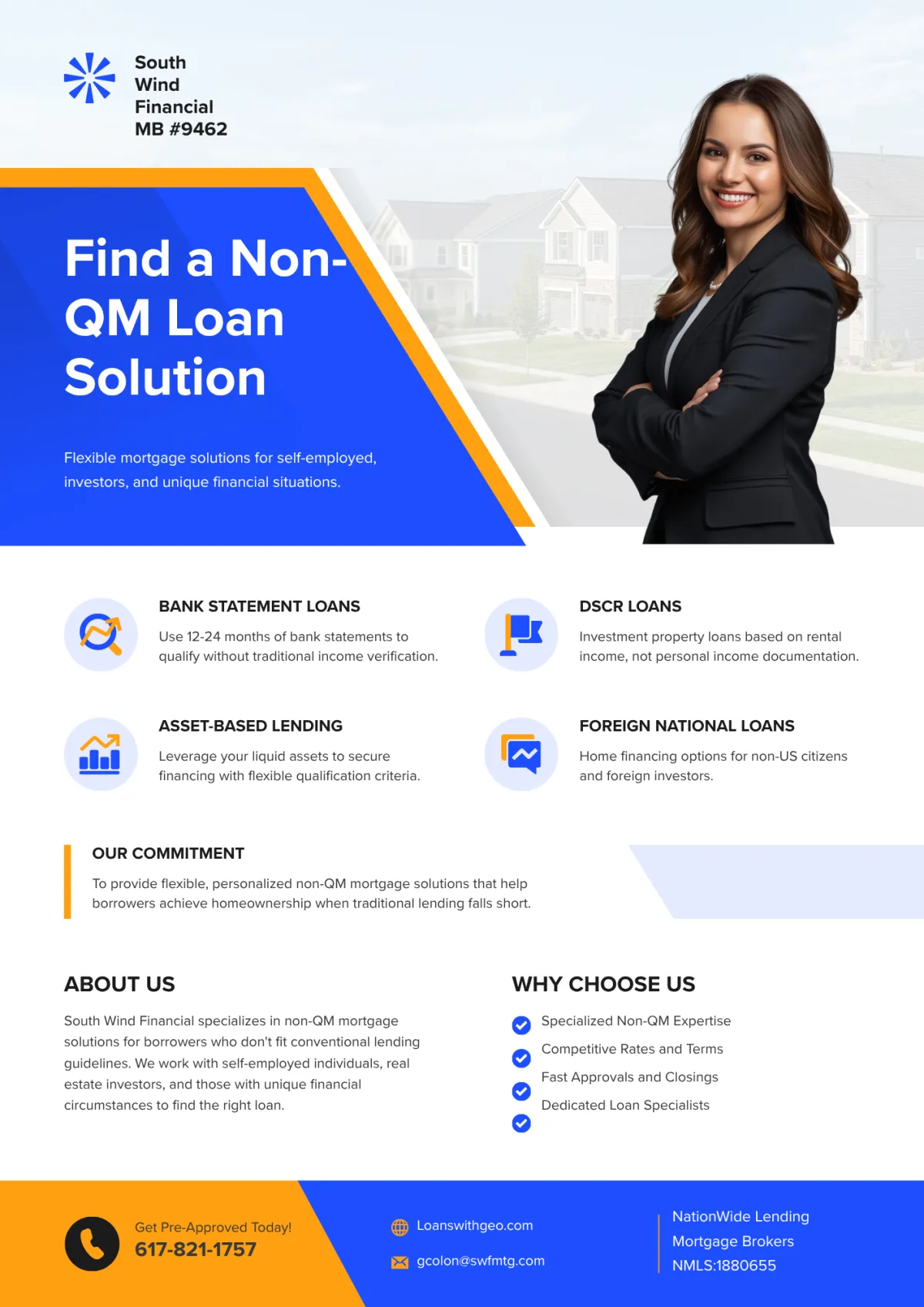
Find flexible Non-QM mortgage solutions for self-employed borrowers, investors, and unique income situations. Get approved with a trusted Non-QM lender today.
Non-QM Mortgage Lender: Find a Non-QM Loan Solution
Navigating the Massachusetts housing market can be tough, especially if you don't fit the mold for a traditional mortgage. If you're self-employed, a small business owner, or have unique income streams, a Non-QM loan might be the perfect solution. This guide will walk you through everything you need to know about Non-QM loans and how to find the right Non-QM lender in Massachusetts.
Introduction to Non-QM Loans
What are Non-QM Loans?
Non-QM loans, short for non-qualified mortgage loans, are mortgage loans that don't meet the strict requirements of qualified mortgages (QM loans). These non-qualified mortgage programs offer alternative mortgage solutions for borrowers who may not qualify for conventional loans due to income, credit, or other factors. They are a type of alternative mortgage product that expands homeownership opportunities.
Differences Between Non-QM and Conventional Loans
The main difference lies in how income is verified. Conventional loans typically require strict W-2s and tax returns, while Non-QM loans offer flexible income verification methods like bank statement loans or asset depletion loans. A Non-QM mortgage, therefore, is geared towards self-employed borrowers who can demonstrate their ability to repay through alternative means when lenders lend.
Importance of Non-QM Loans Today
In today's economy, many people are self-employed or have non-traditional income. Non-QM lending provides mortgage financing to those who might otherwise be excluded from homeownership. With Non-QM loans, more Massachusetts residents in cities like Boston, Worcester, and Springfield can access loan options suited to their unique financial situations and achieve their dream of homeownership.
Who Benefits Most from Non-QM Loans?
Self-Employed Individuals
Self-employed individuals often face challenges when applying for a traditional mortgage. A Non-QM loan, particularly a bank statement loan, offers a viable pathway to home financing for self-employed borrowers throughout Massachusetts, including areas like Boston, Cambridge, Wellesley, Brookline, Newton, Lowell, and Brockton, Fall River, New Bedford, Lawrence, Springfield, Cape Cod, especially for those with varying credit scores.
Small Business Owners and Freelancers
Similar to self-employed individuals, small business owners and freelancers can benefit greatly from Non-QM mortgage solutions. These loan programs understand the nuances of business income and offer alternative ways to prove creditworthiness, enabling them to secure a home loan despite not fitting the traditional W-2 mold. Consider areas like Framingham, Quincy, and New Bedford, Andover & North Andover.
Real Estate Investors and Gig Workers
Real estate investors and gig workers often have multiple income streams and investment properties, making it difficult to qualify for a traditional loan. Non-QM loans, especially those with DSCR (Debt Service Coverage Ratio) options, cater to these unique financial situations, providing flexible loan products that consider the profitability of investment properties across Massachusetts, from Barnstable to Pittsfield.
Key Benefits of Non-QM Loans
Flexible Income Verification Options
One of the most significant benefits of Non-QM loans is the flexible income verification options they offer. Unlike traditional mortgage loans that rely heavily on W-2s and tax returns, Non-QM lenders understand that self-employed borrowers and those with non-traditional income streams may have difficulty meeting these requirements. Non-QM loan programs often accept bank statement loans, 1099 forms, asset depletion, and profit and loss (P&L) statements, providing alternative ways to demonstrate the borrower's ability to repay the mortgage.
Higher Debt-to-Income Ratios
Non-QM lenders may also allow for higher debt-to-income (DTI) ratios than conventional loans, making them a suitable option for various home loan programs. This can be particularly beneficial for borrowers in Massachusetts, where the cost of living and housing prices are high, impacting their net worth. With a Non-QM loan, borrowers may qualify for a mortgage even if their monthly debt obligations are a larger percentage of their income. A higher debt-to-income ratio is a key advantage of non-qualified mortgages.
Investment Property Financing
For real estate investors, Non-QM loans offer attractive options for financing investment properties. Some Non-QM mortgage products, such as DSCR (Debt Service Coverage Ratio) loans, focus on the property's ability to generate income rather than the borrower's personal income. This can make it easier for investors to expand their portfolios and acquire additional properties, offering an alternative mortgage to traditional loan programs.
Common Pain Points and Non-QM Solutions
Strict W-2 and Tax Return Requirements
Many potential homebuyers in Massachusetts struggle with the strict W-2 and tax return requirements of traditional loans. A Non-QM loan offers a workaround by allowing for alternative income verification methods like bank statement loans, which can be a game-changer for those with variable income.
Overcoming Credit Challenges
Credit challenges can also be a significant barrier to homeownership. Non-QM lenders often have more flexible credit requirements, offering a second chance to borrowers who have experienced financial setbacks, expanding access to mortgage loans.
Addressing High Costs in Massachusetts
The high cost of housing in Massachusetts presents a challenge for many prospective homebuyers. Non-QM loans can help address this by providing loan options that accommodate higher DTI ratios or allow for larger loan amounts than traditional mortgages. This flexibility can make homeownership more attainable in the competitive Massachusetts market.
Potential Drawbacks of Non-QM Loans
Understanding Higher Interest Rates
While Non-QM loans offer many benefits, such as flexibility for loans for self-employed individuals, it's important to be aware of the potential drawbacks. One of the most significant is that Non-QM loans typically come with higher interest rates than qualified mortgages or conventional loans. This is because lenders take on more risk by offering loans to borrowers who don't meet traditional lending criteria.
Larger Down Payments and Fees
In addition to higher interest rates, Non-QM loans may also require larger down payments and fees. Lenders may require a more substantial down payment to offset the increased risk associated with these loans. Borrowers should also be prepared to pay higher origination fees, appraisal fees, and other closing costs. A higher down-payment can make the monthly payments more affordable in a non qualified loan.
Risk Factors for Borrowers
It's crucial for borrowers to carefully consider the risk factors associated with Non-QM loans. Because these loans often have higher interest rates and fees, it's essential to ensure that you can comfortably afford the monthly payments. Additionally, borrowers should be aware that some Non-QM loans may have prepayment penalties or other terms that could make it difficult to refinance in the future.
Practical Tips and Actionable Advice
Preparing for a Non-QM Loan Application
Preparing for a Non-QM loan application requires careful planning and organization. Gather all necessary financial documents, including bank statements, tax returns, and profit and loss statements if you're self-employed. Working with a licensed mortgage company can help you present your financial information in the best possible light, improving your chances of approval for your home loan program.
Choosing the Right Non-QM Lender
Selecting the right Non-QM lender is crucial for a smooth and successful loan process. Look for a lender experienced in Non-QM loan programs, with a reputation for transparency and customer service. Compare interest rates, fees, and loan terms from multiple lenders to ensure you're getting the best possible deal on your non-qm mortgage, making sure to explore all available loan options.
Essential Questions to Ask Your Loan Officer
When speaking with a loan officer, ask about their experience with Non-QM loans and their understanding of your specific financial situation. Inquire about interest rates, fees, loan terms, and any potential prepayment penalties. Understanding all the details of the non-qm loan helps you make an informed decision and avoid surprises during the lending process, for example, if you can refinance it later on.
Massachusetts-Specific Insights
Understanding Local Housing Market Dynamics
Massachusetts has a unique housing market with high property values and competitive conditions. Understanding these local market dynamics is essential when considering a non-qm loan. Work with a mortgage lender or broker familiar with the Massachusetts market to find loan options that fit your needs and budget and navigate credit challenges, especially if self-employed.
State Licensing and Consumer Protections
Massachusetts has regulations and consumer protections in place to protect borrowers. Ensure your chosen mortgage company is properly licensed and adheres to Consumer Financial Protection Bureau guidelines. Understanding your rights as a borrower can help you avoid predatory lending practices and make informed decisions throughout the mortgage financing process with alternative mortgage solutions.
Community Considerations in Massachusetts
Consider your community when choosing a residential mortgage and applying for a loan. Factors such as proximity to employment, schools, and amenities can impact your quality of life and the long-term value of your home. Research different neighborhoods to find a community that aligns with your lifestyle and financial goals while considering non-qualified programs available.
Summary of Non-QM Benefits
Non-QM loans offer a valuable solution for borrowers who don't fit the traditional mortgage mold. With flexible income verification, higher DTI ratios, and options for investment properties, Non-QM loans can help you achieve your homeownership goals in Massachusetts through tailored home loan programs. Non-QM lending provides access to home financing to people with non-traditional income streams, for example, if they are self-employed borrowers.
Reach out for a Personalized Consultation
Ready to explore your Non-QM loan options? Contact us today for a personalized consultation. Our experienced team can help you understand your options in real estate and mortgage lending, navigate the application process, and find the right Non-QM loan solution for your unique needs. We work with multiple Non-QM lenders to find you the best possible interest rates and terms. Secure your home loan today!
